
Sometimes on a Friday night around ten-thirty, I zoom out and look at myself. There he is: a middle-aged man, deep in an existential struggle in an industry-defining company, sitting alone on a couch. Reading about the minutiae of a 1960s constitutional reform in Gaullist France. And I wonder: what is this man doing? Shouldn’t he be out dancing or networking or saving the world instead of spending hours with a long-out-of-print book?
Charles de Gaulle… While I would never mistake RFK or LBJ or MLK for the change they brought about in the world, CDG to me was primarily the Paris airport. De Gaulle was also the pre-eminent French politician of the 20th century and one of Europe’s iconic figures of the last century. On par with the likes of Churchill and Adenauer, yet probably far less well known now. So I decided to read Jonathan Fenby’s (long-out-of-print) biography The General: Charles de Gaulle and the France He Saved. Given that it deals at length with the infighting between France’s ever-evolving political factions, the biography is a surprisingly engaging read. I come away disliking de Gaulle for his cold calculations on Algeria and his extreme austerity, and admiring his courage and political strategising.
Political biographies are management books for leaders who want to do the hard work of making their own frameworks for change. De Gaulle’s scheming and cajoling in the early 1940s to get France to come out on top at the end of the Second World War, winning not only the war against Germany, but also its right to self-determination afterwards as a defeated and collaborating nation, is not a replicable ‘case study’ for the boardroom. Only by comparing it to, say, LBJ’s approach to getting the Democratic Party to embrace social reform, and countless other political fights, can one learn a little about how to lead change in adversity.
In his book, Fenby describes the pivotal moments in de Gaulle’s political life day-by-day. “10 June [1940]. ‘A day of extreme anguish,’ de Gaulle recalled.” “18–19 May [1968] (weekend). The President was in a thoroughly bad temper when he landed at Orly. ‘Playtime is over,’ he told the ministers who welcomed him at the airport.” It gives the book urgency and oomph, and shows the art and craft of the statesman in detail. Well-timed words, strategic waiting, a relationship nurtured or neglected. While these minutiae keep me indoors on a Friday night, having read through hundreds of tiny struggles, they reward me with patterns about how the world is changed.
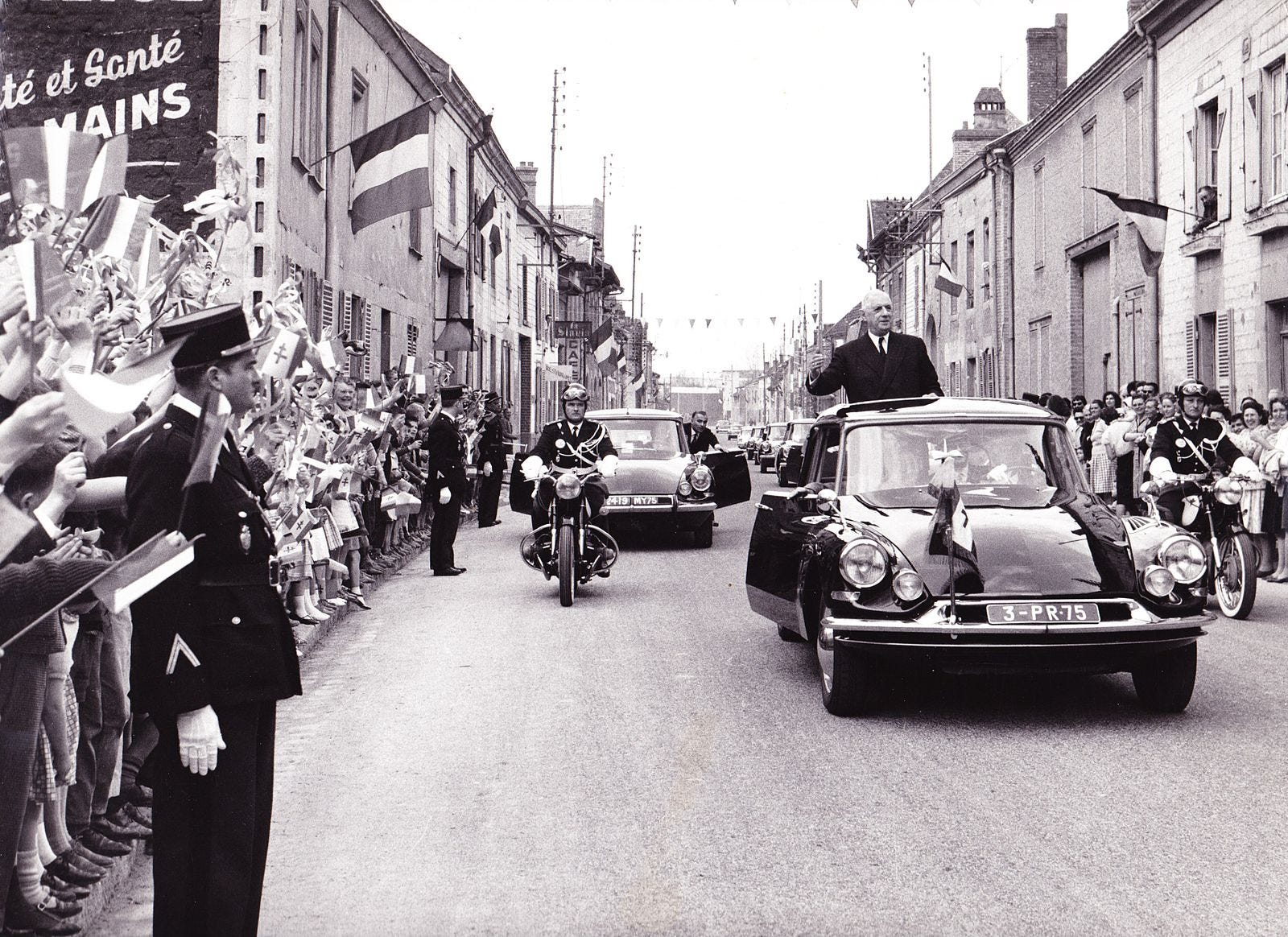

Some of these patterns are obvious. To change the world one needs a values-based commitment to the future. Political leaders of note tend to have a profound intellectual curiosity. They read and learn in all ways possible. After all, the world is complex, and nudging it in any direction takes broad learning and understanding.
Other patterns may have more to do with the leaders I admire. My favourites balance idealism with pragmatism. Lafayette, LBJ and Václav Havel (to name a few) had big ideas yet recognised the practical steps necessary to make change happen. They regularly sacrificed success in the short term for paradigm shifts in the longer run. And thus, moral ambiguity is a key characteristic of the politics I like. Ideals are easy; turning them into change is hard. The right decision is not always obvious or comfortable. Mistakes are inevitable. And thus, like Simón Bolívar and Charles de Gaulle, biographies of change often include horrific episodes. Many of the leaders I’ve learned from regularly faced down the “black dog.”
And while back-room conniving, bullying and smooth talking are the bread and butter of a political biography, it is the moral complexities that make the best ones sparkle. I don’t think I’d ever have appreciated de Gaulle — he’s just too austere, too unconcerned with human suffering, too autocratic to be inspirational to me. But trying to understand how he combined his love for his disabled daughter Anne with his disregard for Algerian lives is an engaging (I’d say literary) activity.
Which brings me back to that man on the couch.
He’s not escaping the world by reading about the past. He’s studying how others dealt with situations I one day hope to deal with. Because no matter what management books want you to believe, there is no roadmap to a sustainable future where we live in harmony with all living things. We can only get there by being willing to learn, adapt, and act with ideals and pragmatism. Even if it means we make mistakes along the way.
Changing the world is never simple, rarely clean, and always worth the effort.
Have a wonderful day,
Jasper