
What is the world’s capital? For most of my life I would have assumed New York, Nuevejol, seat of the UN, setting of Friends, scene of innumerable destructions in movies. But if New York is the capital of the world, equally so is Los Angeles, Moscow, Paris, Beijing. No, the world’s capital is the eternal city, la grande belleza, Rome.
What does the world’s capital need? It needs resilience. Rome has resilience. Matthew Kneale’s creative book Rome, A History in Seven Sackings shows how time and again, Rome rebounded, adding layers to its tapestry of history.
A capital for the world needs character. Rome has character. Coffee is always espresso. You can have it with milk, but really only in the morning. Never StarBucks. Traffic is chaotic but cordial. And even though the city has become much more European in the decades since I last visited, as a classical student on the obligatory tour of Italy, this has added to rather than subtracted from its identity. Rome is still loud, just loud in more languages and identities.
The capital of the world needs crowds. Rome has crowds. I’m glad we paid handsomely for skip-the-queue tickets and reserved timeslots at the Vatican, Colosseum and Pantheon and we skipped queueing for Saint Peter’s Cathedral. Lines stretched for two hours or more, in already considerable heat in late April. But Rome can also be quiet. Just outside the city center, there was always a free table or near empty bus.
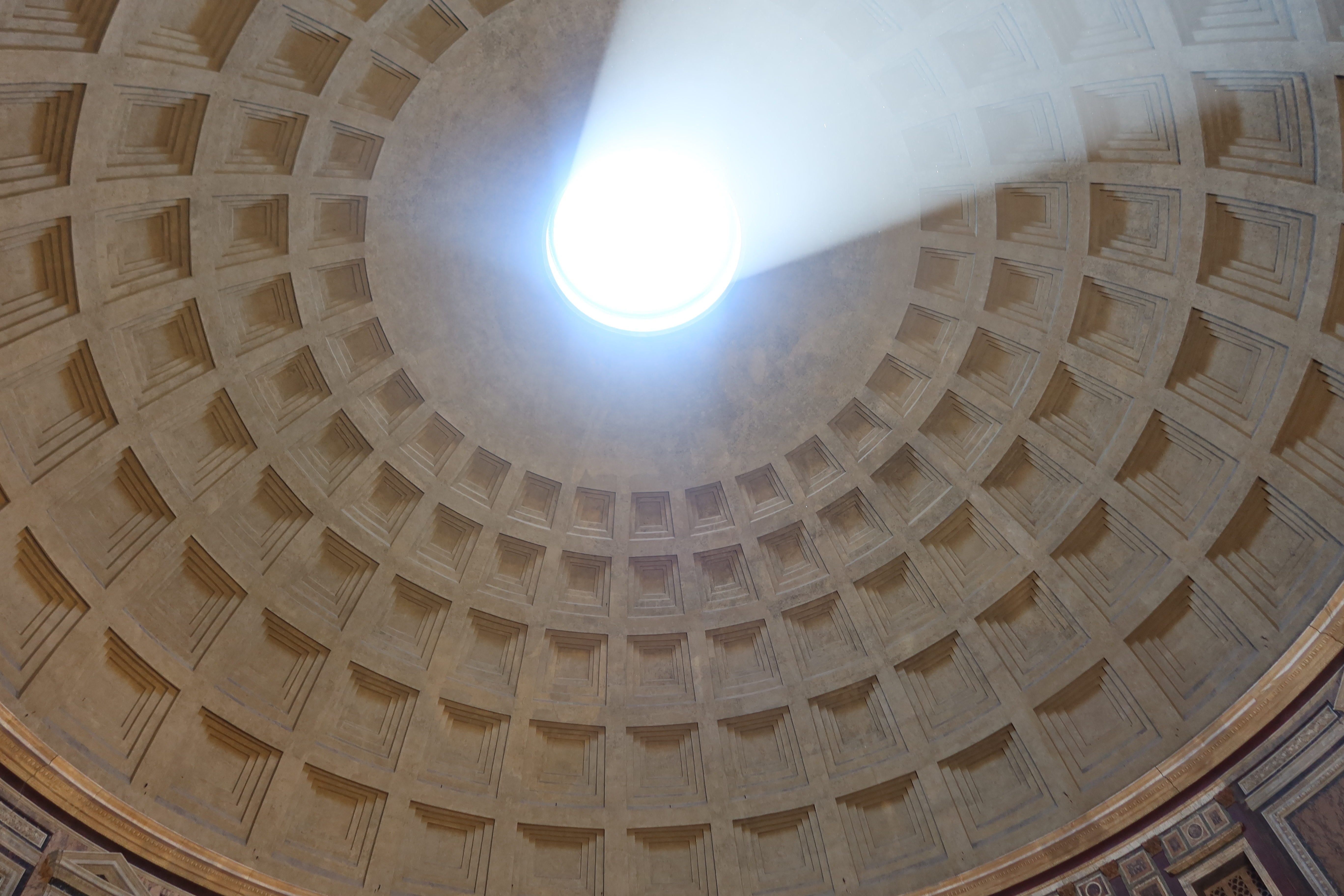
A true capital of the world needs history; deep history. According to legend, Romulus and Remus established Rome in 753 BCE, but the history of the city reaches back in time much further, to the sack of Troy and the legend of Aeneas. While fictional, even Rome’s earliest historians, including Livy, acknowledged its value as a founding story. What can be historically verified anyway shows signs of even earlier human settlement in Rome in the 17th or 18th century BCE. Plus, Rome always acknowledged to be the new kid on the block, audacious in its ambitions yet humble when it comes to how it intended to rule the world.
Which brings me to the most important characteristic of the capital of the world: it needs to be welcoming.
On the eve of our first day in Rome I went for a run. The Via Appia Antica seemed appropriate, given people have been running up and down this road for 23 centuries. After a thrilling stretch with cars through rush hour, it soon turned historic. Roman legionaries marched here, popes, countless tourists. And now I ran up the queen of roads, practically deserted only a few kilometers from the bustle of the Forum Romanum. Parts were newly paved, others consisted of rough cobblestones. Too rough for bikes, tough for runners. Probably not the original, although there are stretches of this BCE road that are still as they once were. Lush gardens stretched alongside the road, as did construction and renovation works. I looped back through a deserted gas station and 80s high rises reminiscent of a Mediterranean Clockwork Orange, to end up among the ruins of Roman aqueducts.
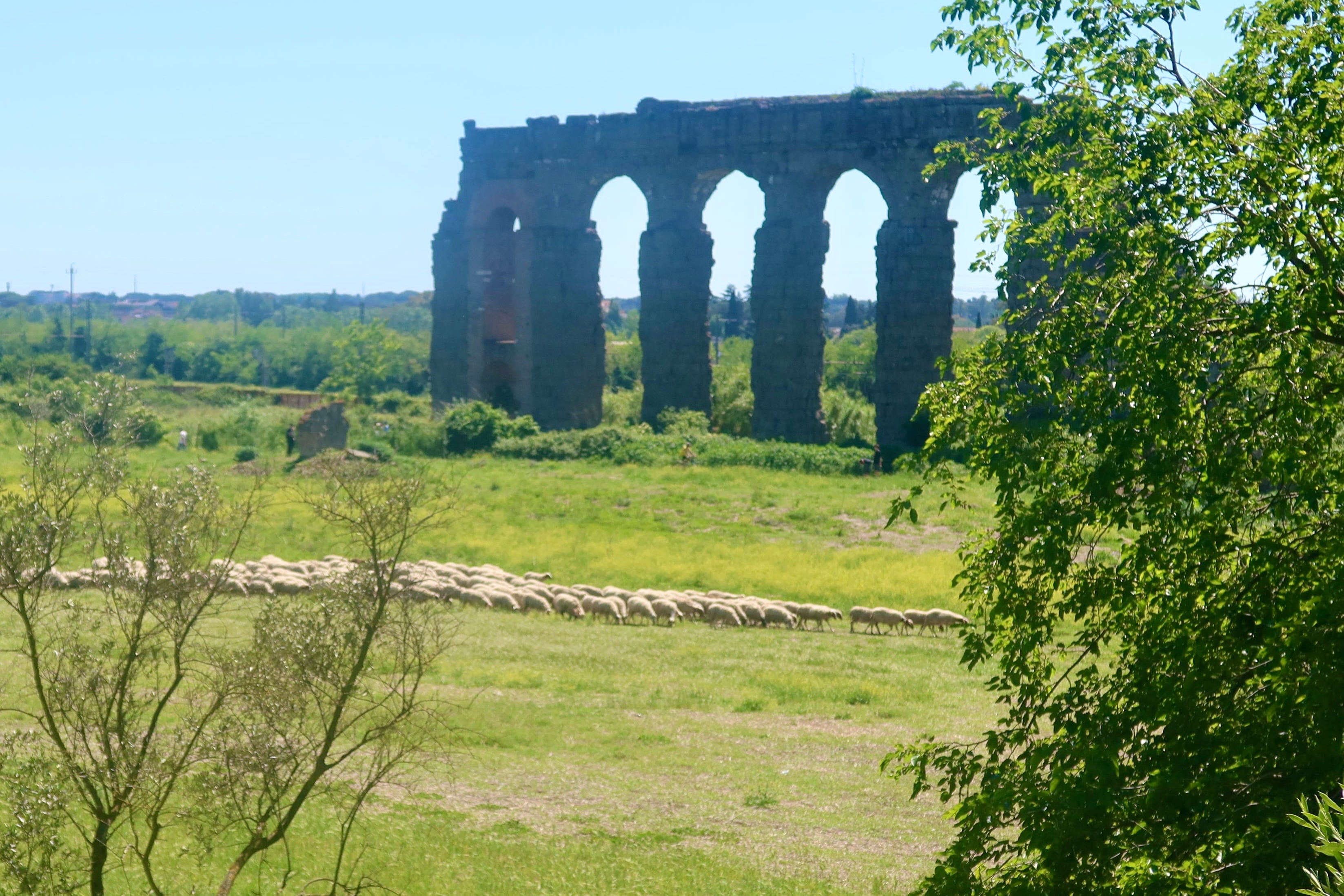
On the Saturday, liberation day in Italy, my family and I went back to the Parco degli Acquedotti, aqueduct park, which I had run through. Throngs of Italian families had gathered to celebrate their victory over fascism and the beautiful spring weather. Bad Bunny drifted by as I saw a flock of sheep graze underneath Aqua Claudia, an aquaduct initiated by Caligula and completed by Claudius in the first century CE. Parks are amazing institutions regardless of their landmarks, but cultural heritage certainly adds to the atmosphere, if only for the shade the arches provide. We played games, ate strawberries, and almost blended in.
The defining trait of the ancient Romans was their openness to turn enemies into friends and the have-nots into emperors. Later, as capital of the Papal States and fascist Italy, Rome became more exclusive. And given the general trend, I don’t know if contemporary Rome is welcoming to all, but it certainly felt welcoming to me.
Importantly, when we turn into a multi planet species and have to select a capital for Earth, it had better have a future. Rome is well above sea level and although the Mediterranean is warming up and drying out, Rome’s always dealt well with water. In ancient times, its eleven aqueducts provided an estimated thousand liters of drinking water per person every day. It will be a challenge for Rome (as for any city) to adjust to a fully sustainable economy, but Rome has faced worse and thrived.
The capital of the world, more than anything else, needs fans. A generation after my last visit, I’m a fan again, so it has at least one. And given the crowds at the Trevi fountain, the hustle and bustle around the Forum Romanum and the packed crowd in the Sistine Chapel, I venture I’m not the only one. Anyone up for a vote?
— Jasper